10 Digital Product Ideas for Creators: A 2026 Guide
Explore 10 digital product ideas for creators, from ebooks and courses to templates and audio. Learn use cases, trade-offs, and how to start selling.
You've got expertise people already ask you about, a notes app full of half outlines, and a blank page that keeps winning. You don't lack material. You lack a format you can finish with the time, skills, and audience you have right now.
That's the filter for these 10 digital product ideas. A course and a checklist can teach the same method, but they demand very different amounts of filming, design, support, and buyer patience. Pick wrong and you spend months building something your audience never wanted in that form.
The pressure is normal. In 2025 reporting cited by Creator Spotlight's monetization report, only 46% of creators felt successful and 58% struggled to monetize. I read that less as a talent problem and more as a fit problem. Too many creators start with the largest product instead of the smallest one that proves demand.
This guide ranks each idea by the work it demands, the buyer it suits, and the most common reason it underperforms. Read for constraints, not novelty. If you can't record video this month, don't start with video. If your audience wants a tool they'll use weekly, don't give them a long read they'll open once. Choose the product you can ship, test with real buyers, and improve without rebuilding everything.
1. Ebook
An ebook is still the most forgiving first paid product. You're packaging a focused argument, method, or set of case studies into a PDF, EPUB, or Word file that buyers can read on their own schedule. It doesn't need a camera, a learning platform, or live sessions.
Demand for the format is established. In 2023, 41 million ebooks were sold in Germany, according to Statista's e-readers topic page. That doesn't mean any ebook sells. It means buyers already understand what they're getting, which lowers your education burden.
HubSpot uses marketing and sales ebooks as gated lead magnets, while creators like Pat Flynn have used guides to build an audience for related offers. Self-published nonfiction on Amazon Kindle Direct Publishing works on the same logic, one clear promise for one reader.
Where ebooks fail
Most fail on scope. A broad book about business growth competes with free search results. A narrow book about pricing a first consulting offer gives a buyer a reason to pay now.
- One problem, one reader: Name both on the cover and in the title.
- Add application: Include checklists or exercises so it isn't passive reading.
- Draft from your method: Use an interview about your own process before you edit.
Our guide to building an ebook from your expertise walks through that drafting step. I'd choose an ebook when your strength is explanation and you need a credible, low-maintenance product first.
2. Online Course
A course asks the most from you and charges the most for it. You're not selling information. You're selling a sequenced path to one measurable outcome, with lessons, practice, and proof the buyer got there.
The format fits how adults already learn online. Market estimates cited by Dataintelo's e-learning market report place self-paced learning at 62.4% of global e-learning activity. In 2025, 34.8% of internet users in the European Union reported taking an online course or using online learning materials, according to Eurostat's online learning news release.
Marie Forleo's B-School uses a cohort model. Ali Abdaal sells productivity and study courses through his own platform. Ramit Sethi expanded a book into a course business. Each one narrows the outcome before adding content.
The chart below frames the trade-off every course creator faces, heavy upfront work for a longer payoff window.
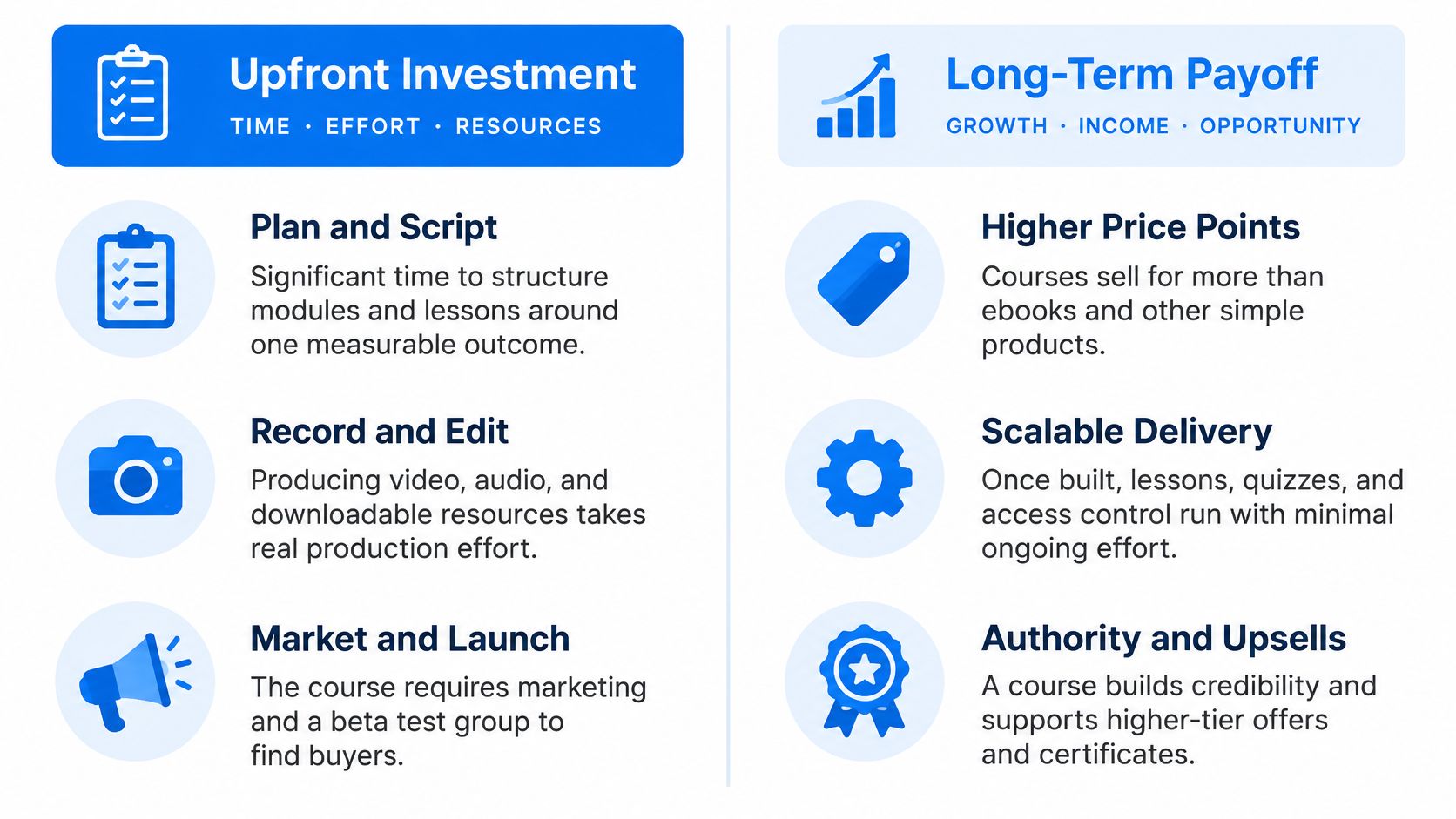
Keep lessons short, pair each module with a workbook or checklist, and test with a small beta group before a full launch. Our practical notes on selling courses online without a huge launch cover that sequencing. Courses underperform when they're recorded lectures with no applied artifact at the end. If you can't define the final artifact in one sentence, you're not ready to outline modules.
3. Workbook
Say you're a coach whose clients do good thinking in sessions and lose it by Tuesday. A workbook fixes that gap. It turns your prompts, exercises, and worksheets into work the buyer completes between readings or calls.
That's why workbooks suit coaches, therapists, and educators better than pure information products. Brené Brown's Dare to Lead companion workbook extends the book into practice. Personal finance creators sell budgeting workbooks for the same reason. The buyer isn't paying for more text. They're paying for guided action.
The audience need is real but time is tight. The OECD report on online learning for adults found 28% of adults cited work commitments and 15% cited family responsibilities as reasons for not participating in training. Short, self-paced exercises respect that constraint.
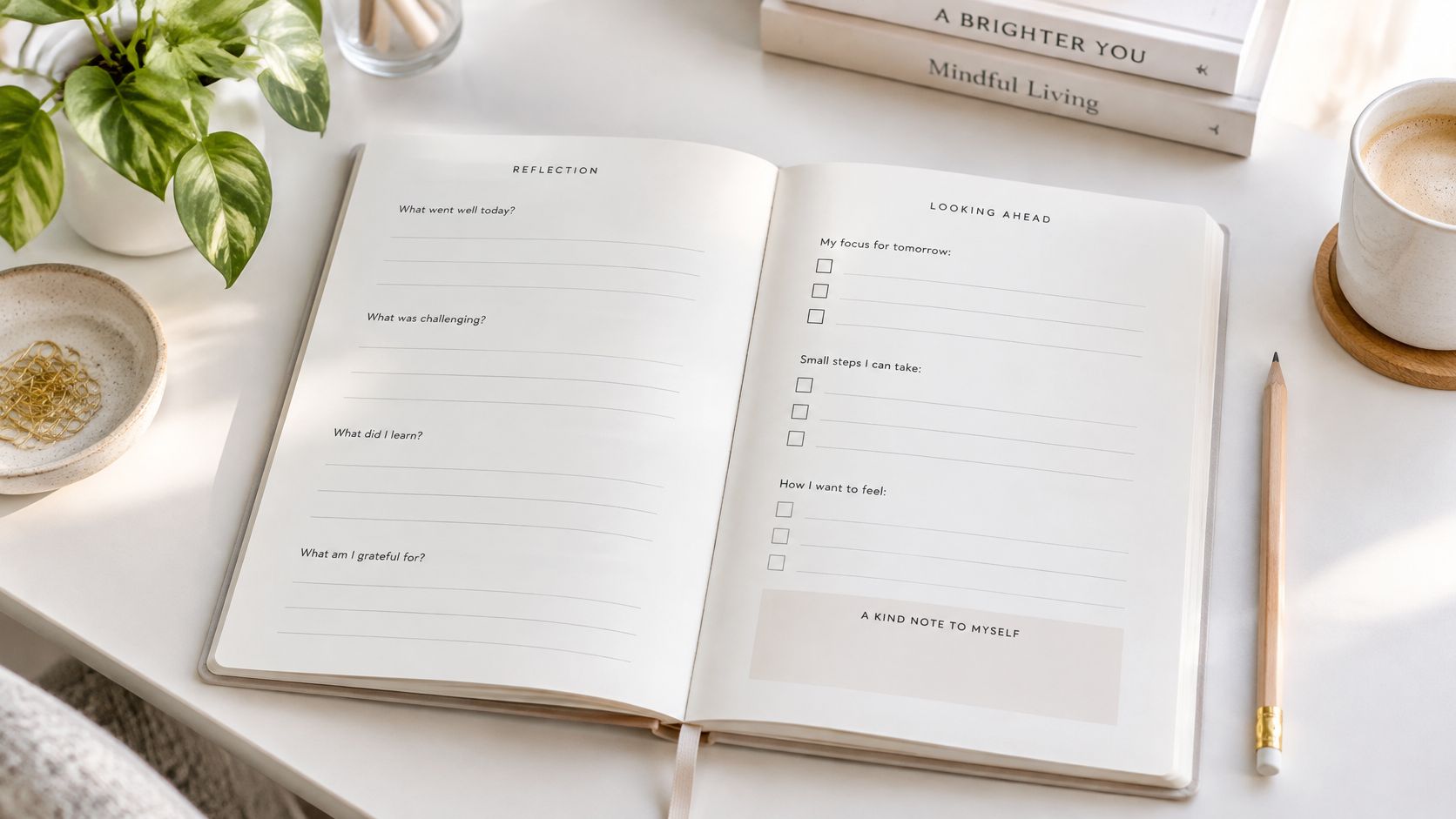
Build from exercises you already use with clients. Keep each task to one page with a time estimate, and include a completed sample page so buyers see what good looks like.
Don't sell blank space. A workbook earns its price when every prompt moves the buyer closer to a decision, a plan, or a finished draft.
Design for print and screen from the start. Workbooks underperform when they're pretty PDFs with vague journaling prompts and no visible finish line.
4. Notion or Spreadsheet Template
Templates are tools, not lessons. A buyer duplicates your Notion system, Google Sheets model, or Excel file and starts using it that day for budgeting, content planning, or client tracking. That immediacy is the selling point.
Thomas Frank's Notion templates for students work because they solve a recurring weekly workflow. Independent finance creators sell budgeting sheets on the same principle. Gumroad sellers do it with content calendars and client management systems.
This short walkthrough shows the kind of product tour that reduces buyer confusion before purchase.
Selling templates internationally is also more realistic than it used to be. The World Bank Global Findex report reported that in low- and middle-income economies, 61% of adults made or received a digital payment in 2024. Payment access still varies by region, but it isn't limited to card-heavy markets anymore.
What makes a template sellable
- One workflow: Don't bundle five unrelated systems into one confusing dashboard.
- A short video tour: Show setup in minutes to cut support questions.
- Clear requirements: State the platform, version, and plan the buyer needs.
Templates underperform when they're beautiful but fragile. One broken formula or unexplained view generates refunds and support threads. I'd start here if you already live inside the tool and your audience does too.
5. Printable Planner or Journal
Printables look simple, and that simplicity is deceptive. A daily planner, habit tracker, or guided journal sold as a PDF is cheap to produce and easy to deliver. It's also one of the most crowded shelves you can enter, especially on Etsy.
Successful sellers narrow hard. An undated planner for freelance designers beats a generic planner for everyone. A gratitude journal for new parents beats a gratitude journal for all adults. Student study planners sell when they're built around exam weeks and revision blocks, not vague productivity language.
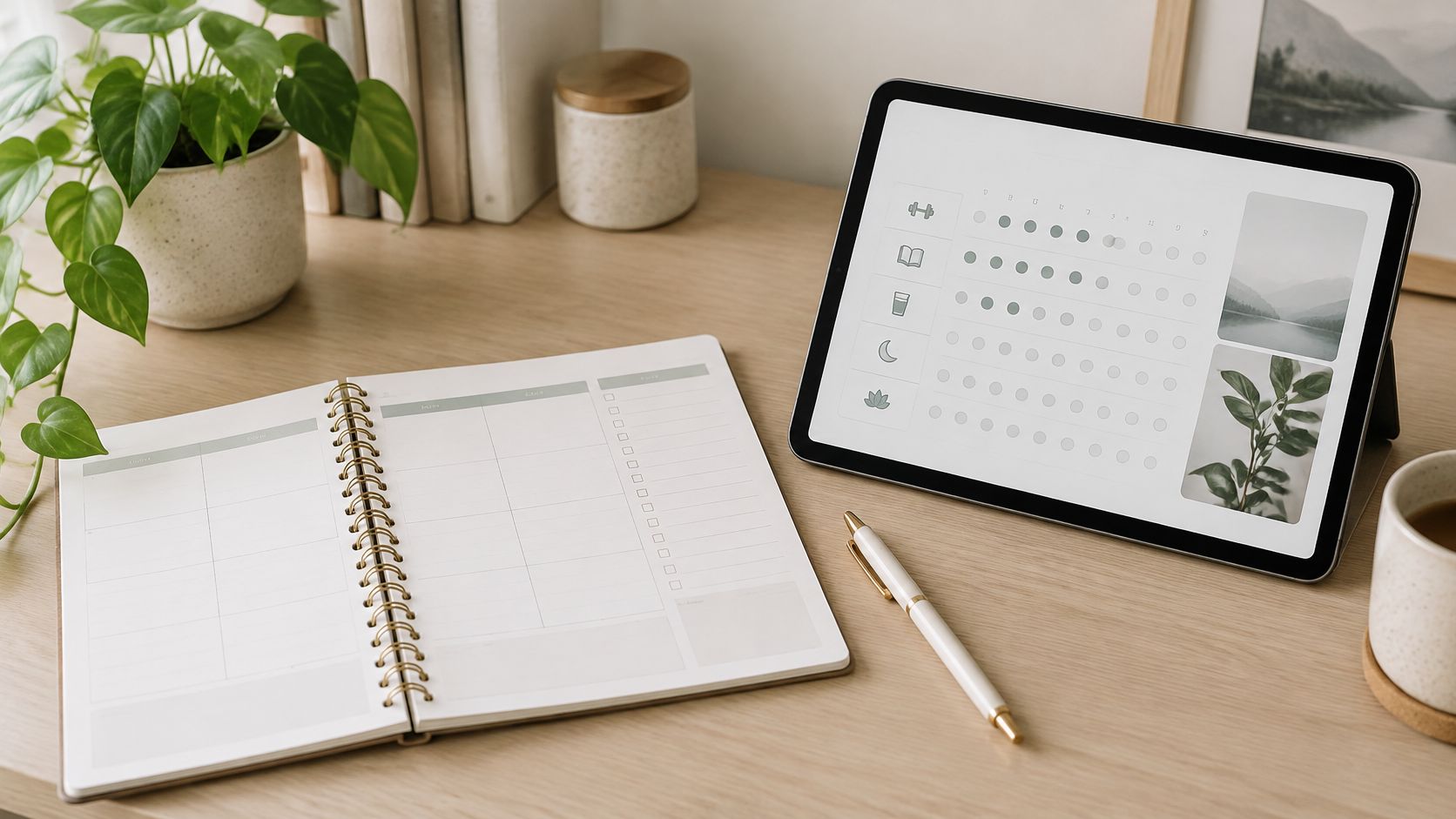
Buyers judge printables visually in seconds. Your layout, typography, and consistency across pages do more selling than your description does. If design isn't your strength, this format will cost you more time or money than it first appears.
Offer both A4 and US Letter versions so you don't lose sales over paper size. Make a fillable version for tablet users if you can. Bundle related sheets, such as a weekly planner plus habit tracker plus review page, to lift order value without creating a new product from scratch.
Printables underperform when they're undifferentiated. There are already thousands of clean, minimal planners. Your edge has to be a specific user, a specific routine, or prompts nobody else is asking.
6. Checklist, Cheat Sheet, or Quick-Reference Guide
This is the fastest product on the list to make and the easiest to undervalue. A one to five page checklist or cheat sheet condenses a process you already run into steps a buyer can follow without rereading a chapter.
HubSpot's free marketing checklists show the lead magnet version. Marketing consultants sell social media posting checklists. Course creators give away launch cheat sheets to fill cohorts. The format works at both ends because it delivers a quick win and proves you know the work.
Build it from real use
Start with the checklist on your own desk. If you've used it with clients, you've already debugged the order, the missing steps, and the points where people stall. Invented checklists read smoothly and fail in practice.
Give it a benefit-led title, such as The 10-Step Launch Checklist, and place the download at the end of relevant blog posts and sales pages. Connect it to a welcome email sequence that points to a paid offer. A free checklist with no next step is just a nice file.
Practical rule: If a step can't be checked off, it doesn't belong on a checklist. Rewrite it as an action or move it to a guide.
These underperform when they're too generic to save time. I'd use one as your first public product if you need demand evidence this week, not this quarter.
7. AI Prompt Library
A prompt library sells tested shortcuts. Buyers get prompts organized by job, such as writing sales copy, planning content, or summarizing customer feedback, usually as a document, spreadsheet, or Notion page. They aren't paying for clever wording. They're paying to skip trial and error.
That makes trust your main problem. In global research described in Adobe's 2025 creators survey announcement, 69% of creators worried about their content being used to train AI without permission, and 34% cited unreliable output quality as a barrier. A library built on untested, generic prompts feeds exactly that skepticism.
Stronger examples are niche and evidence based. Prompt packs for marketers show the input and output. Freelancer kits for proposals include the brief they were tested on. Spreadsheet bundles for email copy organize prompts by campaign type, not by tool logo.
- Test every prompt: Run each one more than once and keep the best example.
- Show before and after: Buyers need to see the improvement, not trust your claim.
- Update on a schedule: Stale prompts lose value as tools change.
For tool selection by task, see our guide to the best AI tools for coaches and course creators. Prompt libraries underperform when they're scraped lists with no examples. Your testing notes are the product.
8. Email Course or Mini-Course
An email course teaches in small daily pieces. You send five to fourteen lessons, one at a time, each with a clear subject line and one action step. It works as a lead magnet, a low-priced entry product, or an onboarding sequence.
Coaches run five-day challenge sequences that lead into higher-priced programs. Newsletter writers turn writing and productivity lessons into mini-courses. Software and creator products use onboarding emails to introduce paid features. In each case, delivery and marketing are the same asset.
Structure that keeps people opening
Pick one quick win the subscriber can reach by the final email. Open each lesson with the problem it solves, teach one idea, then assign one small task. Long, essay-style lessons get saved for later, which usually means never.
End the sequence with a specific paid offer and a clear next step. Don't apologize for selling. A reader who completed five useful lessons is the warmest prospect you'll get.
This format suits you if you write well, don't want to film, and already have or want an email list. It underperforms when lessons are vague inspiration with no task, because subscribers feel informed but make no progress they can credit to you. It also demands deliverability basics. Authenticate your sending domain and keep subject lines honest, or your best lesson lands in spam.
9. Audio Program or Podcast Series
Audio fits the parts of life screens don't. Buyers listen while commuting, walking, or training, which makes it strong for language lessons, meditation, interview-based education, and business training that doesn't need visuals.
Language learning packs sell as downloadable MP3 lessons. Meditation creators sell guided programs through their own storefronts. Coaches use private podcast feeds to deliver paid member content without asking clients to sit through video.

Production is lighter than video, but it isn't effortless. Bad room echo, inconsistent volume, and rambling structure make buyers quit fast. Script your openings and endings, record in a soft furnished room, and edit out long pauses.
Keep episodes focused and give each one a clear title that states the benefit. Add a written transcript or summary PDF for accessibility and for buyers who like to skim before listening. Interviews with other experts reduce your solo recording load and bring in their audiences, but you still own the editing.
Offer one free episode as a sample. Audio underperforms when buyers can't judge your voice, pace, or sound quality before paying. A strong sample removes that risk better than any sales copy.
10. Digital Bundle
A bundle isn't a new product. It's packaging. You combine two or more items that serve the same outcome, such as an ebook, a workbook, and a template, and sell them together for less than the separate total.
That only works if the pieces belong together. Template bundles on Gumroad sell when every file supports one workflow. Launch bundles work when a course, workbook, and prompt library move the buyer through the same project. Random collections feel like a clearance bin.
The wider market gives bundles room. In 2024, the global creator-economy market was valued at approximately $149.4 billion, according to Market.us's creator economy market report. More creators selling more small products means more back catalogs ready to be repackaged well.
How I'd price and time it
Price the bundle so buyers save a clear amount versus buying separately, and show the math on the page. Use a limited launch window instead of a permanent discount, or you'll train your audience to wait. Add a premium tier with a call or personal review if you want a higher price point without making new content.
Bundles underperform when they hide weak products inside volume. Lead with your strongest item, name what each piece does, and cut anything you wouldn't sell alone. Buyers can tell the difference between a system and a pile.
Digital product formats compared by effort, price position, and best use
| Item | Typical Format | Production Effort | Price Position | Best For |
|---|---|---|---|---|
| Ebook | 20–150-page PDF, EPUB, or Word file | Low | Low to mid; often free or one-time purchase | Packaging frameworks, case studies, or expertise in a focused resource |
| Online Course | Sequenced video, text, or audio lessons with resources | High | Higher than ebooks | Teaching a structured process or measurable outcome |
| Workbook | Printable or fillable PDF with exercises and prompts | Low to moderate | Low to mid; often bundled | Helping readers apply concepts through guided activities |
| Notion or Spreadsheet Template | Duplicable Notion workspace, Google Sheet, or Excel file | Moderate; requires technical setup | Low to mid | Solving a specific workflow or organization problem |
| Printable Planner or Journal | Print-ready or fillable PDF | Moderate; design-heavy | Low; accessible impulse purchase | Planning, habit tracking, reflection, and other visual routines |
| Checklist, Cheat Sheet, or Quick-Reference Guide | One- to five-page PDF or digital guide | Low | Free to low-priced | Offering quick wins, lead generation, or a product add-on |
| AI Prompt Library | PDF, spreadsheet, or Notion database | Low to moderate; requires testing and updates | Low to mid | Helping users complete specific tasks with AI |
| Email Course or Mini-Course | Five to fourteen scheduled email lessons | Low to moderate | Free to low-priced; often leads to a paid offer | Building an email list and nurturing subscribers |
| Audio Program or Podcast Series | Downloadable MP3 lessons or private podcast feed | Moderate; requires recording and editing | Low to mid | Teaching or guiding listeners who prefer learning on the go |
| Digital Bundle | A packaged collection of two or more digital products | Low to moderate; coordinate existing products | Discounted compared with separate items | Increasing order value with complementary resources |
Choosing Your First Digital Product
Start with the format that matches the work you can finish, the audience you already reach, and the expertise you can show without guessing. That's a smaller decision than most creators make it. You're not choosing a business model for the next decade. You're choosing a first test you can complete, sell, and learn from.
If you need evidence fast, build a checklist, cheat sheet, or email mini-course. You'll learn whether people open, click, reply, and pay before you invest weeks in production. If your method already works with clients, a workbook or short ebook captures it with the least new skill to learn. If your audience keeps asking to see your system, a template gives them the system itself. Save the full course for when buyers have already paid for a smaller version of the outcome and asked for more depth.
Validation beats volume. Talk to prospects about the specific job they're trying to get done. Publish a sample, a preorder page, or a free first piece, and watch what people do rather than what they praise. Compliments are cheap. Completed worksheets, replies to lesson emails, checkout starts, and repeat questions tell you what to build next. Set a simple stop or go line before you start, such as a number of sales, replies, or completed samples, so you don't keep polishing a product nobody wanted.
Trust matters more as AI makes generic content cheaper. Your defensible value is first-hand examples, judgment, and a method buyers can trace back to you. Keep notes on where claims and examples came from. Check anything high risk, especially in health, finance, legal, or professional training topics. Edit drafts in your own voice and say plainly how the product was made when buyers would reasonably want to know. A prompt pack without test results and an ebook without your own examples both fail the same test.
Tools should reduce setup, not replace decisions. A platform such as Genesize can cover drafting, storefront, checkout, and delivery in one workspace, which helps when you'd otherwise stitch together separate tools. That doesn't change your responsibilities. You're still accountable for what you publish and sell, including your customer contracts, refund terms, taxes, accessibility, and fulfillment. Keep a product private while you check its content and buying steps, then launch to a small group before you promote widely.
Build one small product. Put it in front of real buyers. Let their questions, completions, and objections decide whether the next step is a workbook, a course, or a bundle. That's how these 10 digital product ideas stop being a list and start becoming a catalog you can grow.
If you're ready to turn one of these ideas into a finished ebook, course, or practical resource, Genesize gives you AI-assisted drafting from your own expertise plus a storefront, Stripe checkout, delivery, email, and CRM in one workspace. Start with a small product, check the buying steps before you go live, and use real buyer feedback to decide what to build next.